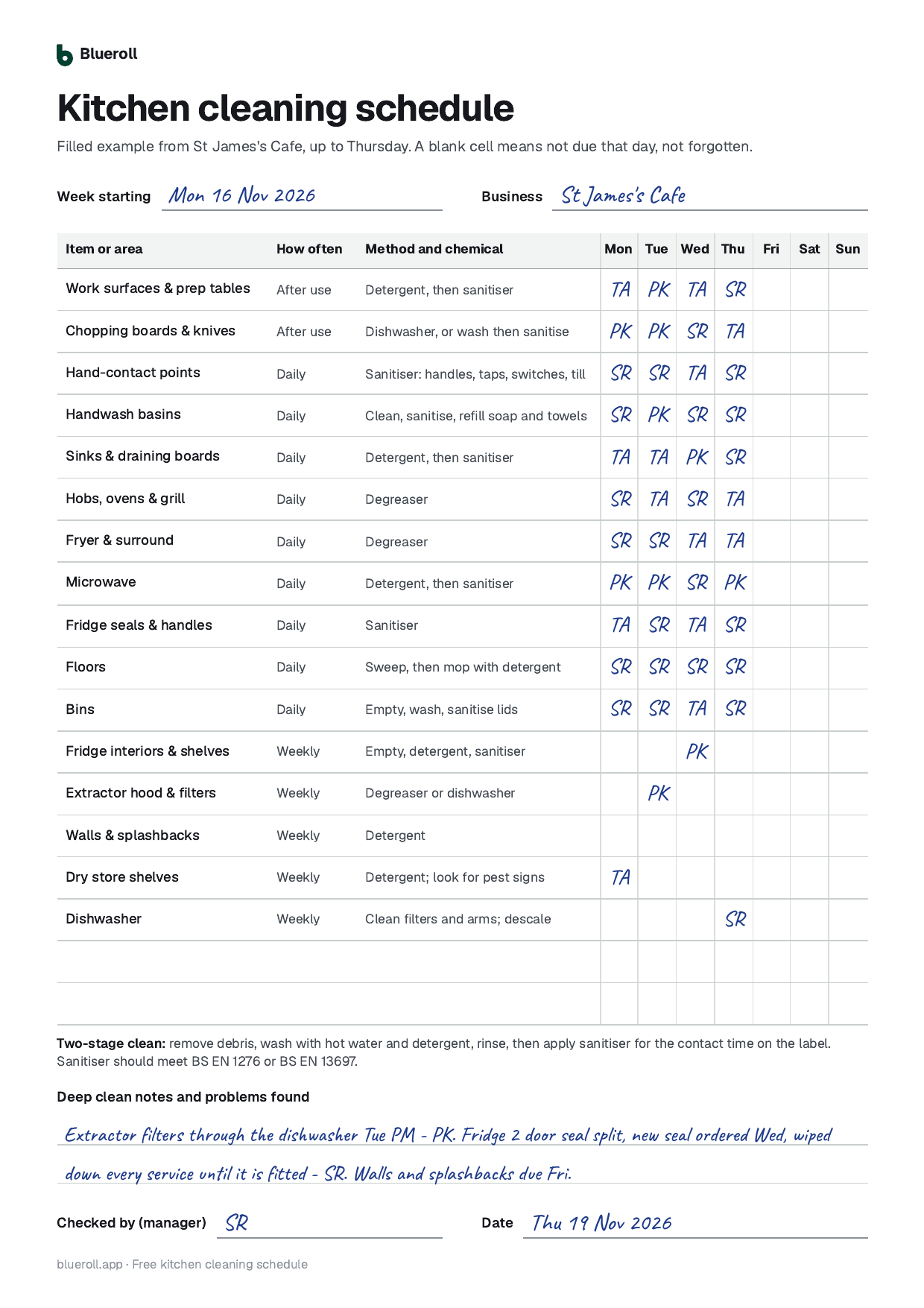
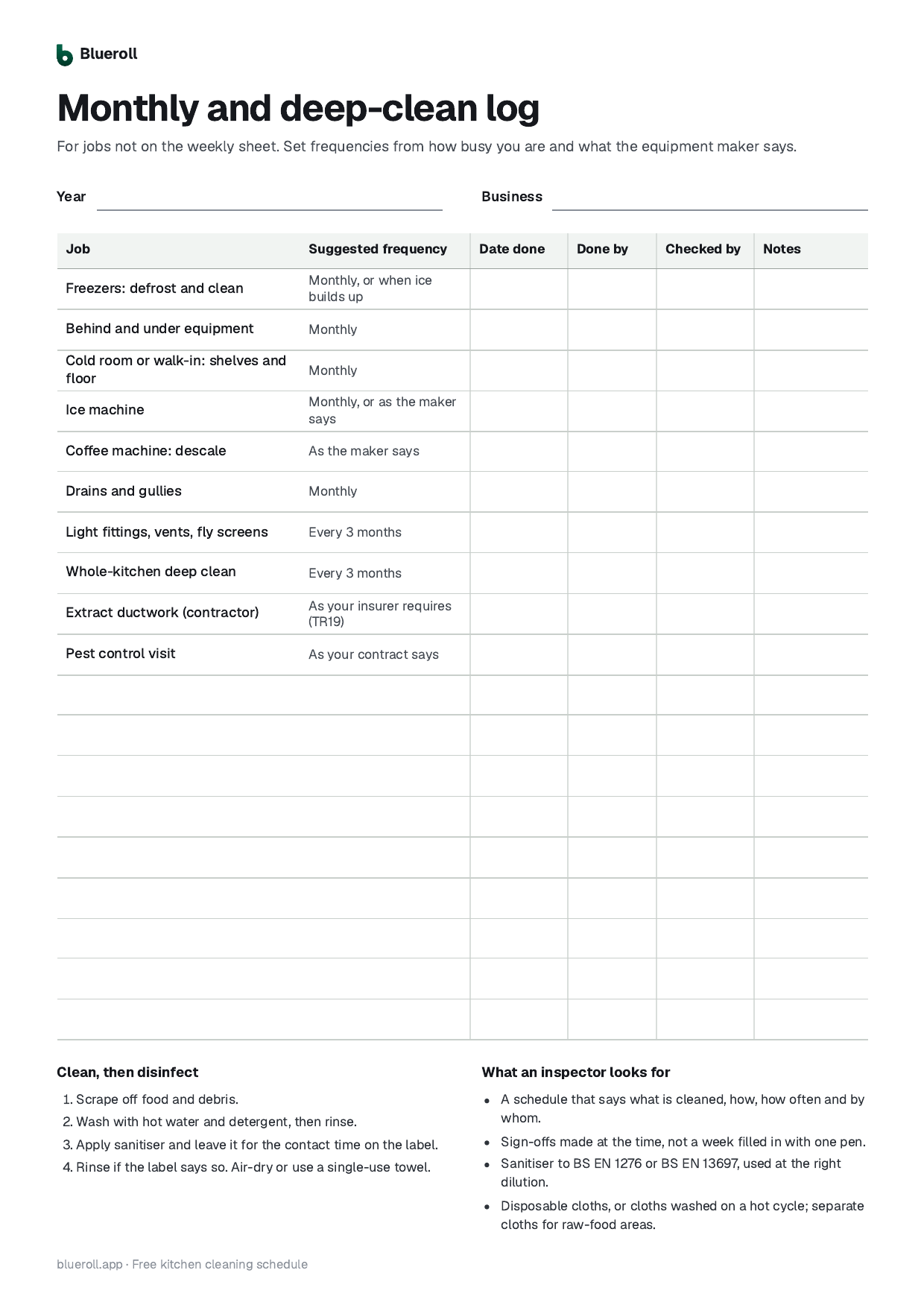
A printable A4 weekly cleaning schedule for UK kitchens, with the jobs, methods and frequencies already written in, plus a filled-in example and a monthly deep-clean log.
Want to change the jobs before printing? Build your own cleaning schedule online, with CSV export and no email or account.
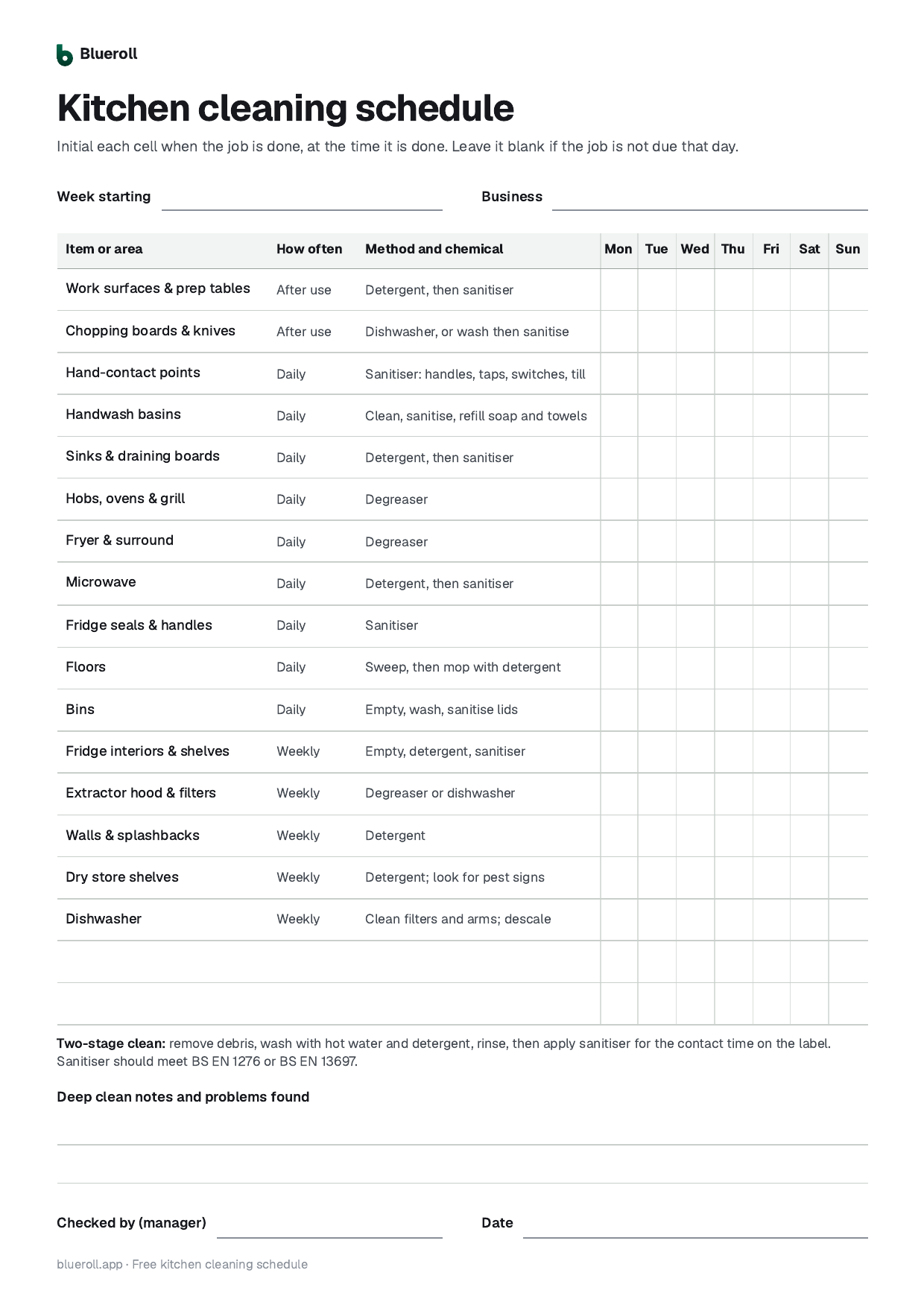
It fits the Cleaning section of Safer Food, Better Business. The 16-page HACCP pack, the fridge temperature log and the EHO inspection checklist are free too.
The schedule already lists these jobs. Move them to suit how busy you are.
UK food hygiene law requires premises to be kept clean, and equipment that touches food to be cleaned and, where necessary, disinfected. The Food Standards Agency asks for a cleaning schedule that says what gets cleaned, how often and with which products.
Disinfectants and sanitisers should meet BS EN 1276 or BS EN 13697.
A food hygiene rating comes from three scores. Cleaning and your records count towards two of them.
How food is prepared, cooked, reheated, cooled and stored.
Cleanliness, layout, lighting, ventilation and pest control. A clean kitchen scores here.
Your food safety system and records. A signed cleaning schedule scores here.
A schedule nobody signs, a week initialled in one pen, sanitiser mixed by guesswork and one cloth for raw and ready-to-eat areas all lose marks. Food hygiene ratings explained shows how the scores add up.
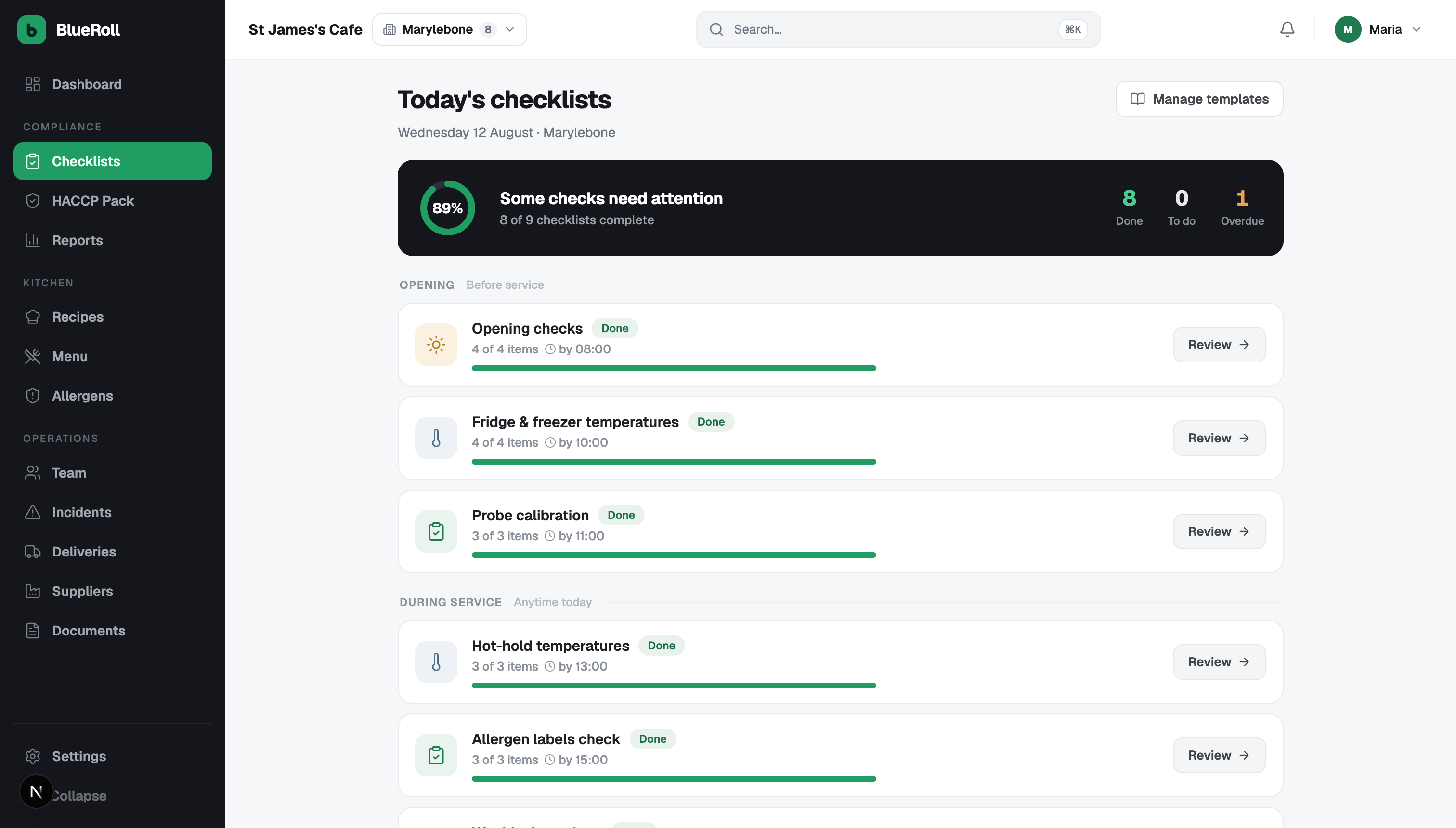
Blueroll puts the same schedule on your team’s phones. Each job is ticked with a name and a time, a manager signs off the finished list, and the record files itself, ready for an inspection. See how the checklists work.
It costs £24.99 per site per month after a 14-day free trial, with no card needed, and we set it up for you, free. Start the free trial.
Food-contact surfaces after every use, the rest of the kitchen every day, and fridges, extractor filters and walls every week. Deeper jobs such as defrosting freezers and cleaning behind equipment usually go monthly, and extraction ductwork follows your insurer's TR19 schedule. The template lists all of these, so you only adjust the frequencies to how busy you are.
Yes, as long as each job is signed when it is done, by the person who did it, and a manager checks the sheet. Inspectors question a week filled in with one pen at the end. When paper gets tedious, digital checklists keep the same record with the time and the name on every tick.
One that meets BS EN 1276 or BS EN 13697, used at the dilution and for the contact time on the label. Inspectors check the bottle, so keep the product name on the schedule.
Yes. No charge, no account and no watermark. Enter your email, the PDF downloads, and you can print it for as long as paper works for you.