Blueroll Blueroll Start for free
Who it's for
Independents Groups & estates NEW Franchises
Features
Multisite NEW HACCP Checklists Allergen Matrix AI Recipe Import Compliance Reports Team Management Deliveries Documents HACCP Pack Incidents
Free tools
Free HACCP template Free self-audit Check a hygiene rating Hygiene rating maps See all free tools →
Pricing FAQ Sign in
Start for free
Blueroll › Free Tools › Fridge temperature log sheet

Free fridge temperature log sheet

A printable A4 weekly log in °C for fridges, freezers, display chillers and the cold room, plus a filled-in example and a cooking, cooling and hot-holding log.

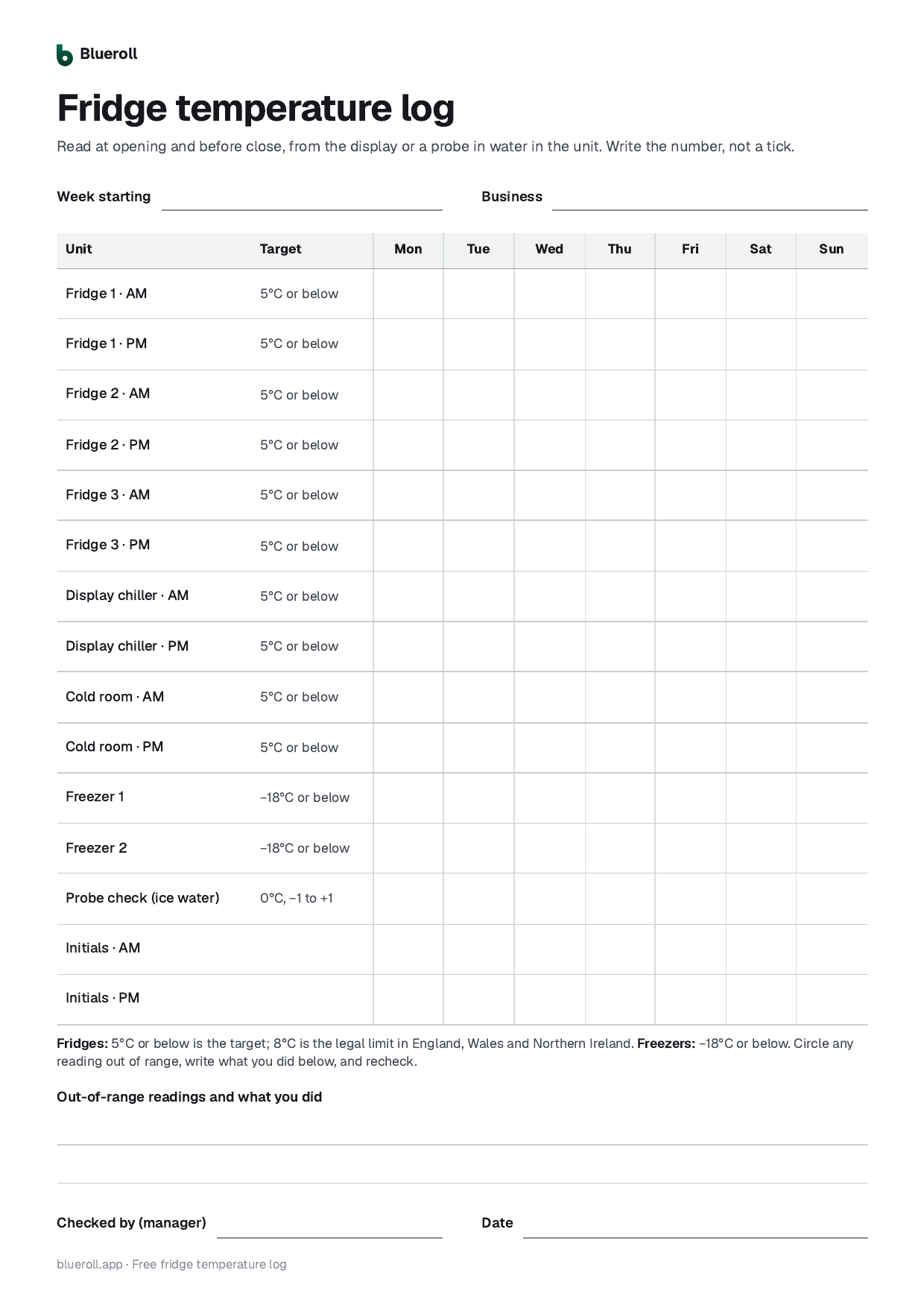
Blank weekly fridge and freezer temperature log in °C, with the target temperature for each unit and a column for each day

How to use the log

  1. Tape the sheet to the fridge door.
  2. Read every unit when you open and before you close, from the display or a probe in water kept in the unit.
  3. Write the number, the time and your initials, not a tick.
  4. Circle a reading out of range, write down what you did, and recheck.
  5. Check your probe thermometer in iced water and write down the result.

The 16-page HACCP pack, the kitchen cleaning schedule and our SFBB guide cover the rest of the paperwork. Kitchens in Scotland can use the CookSafe HACCP template.

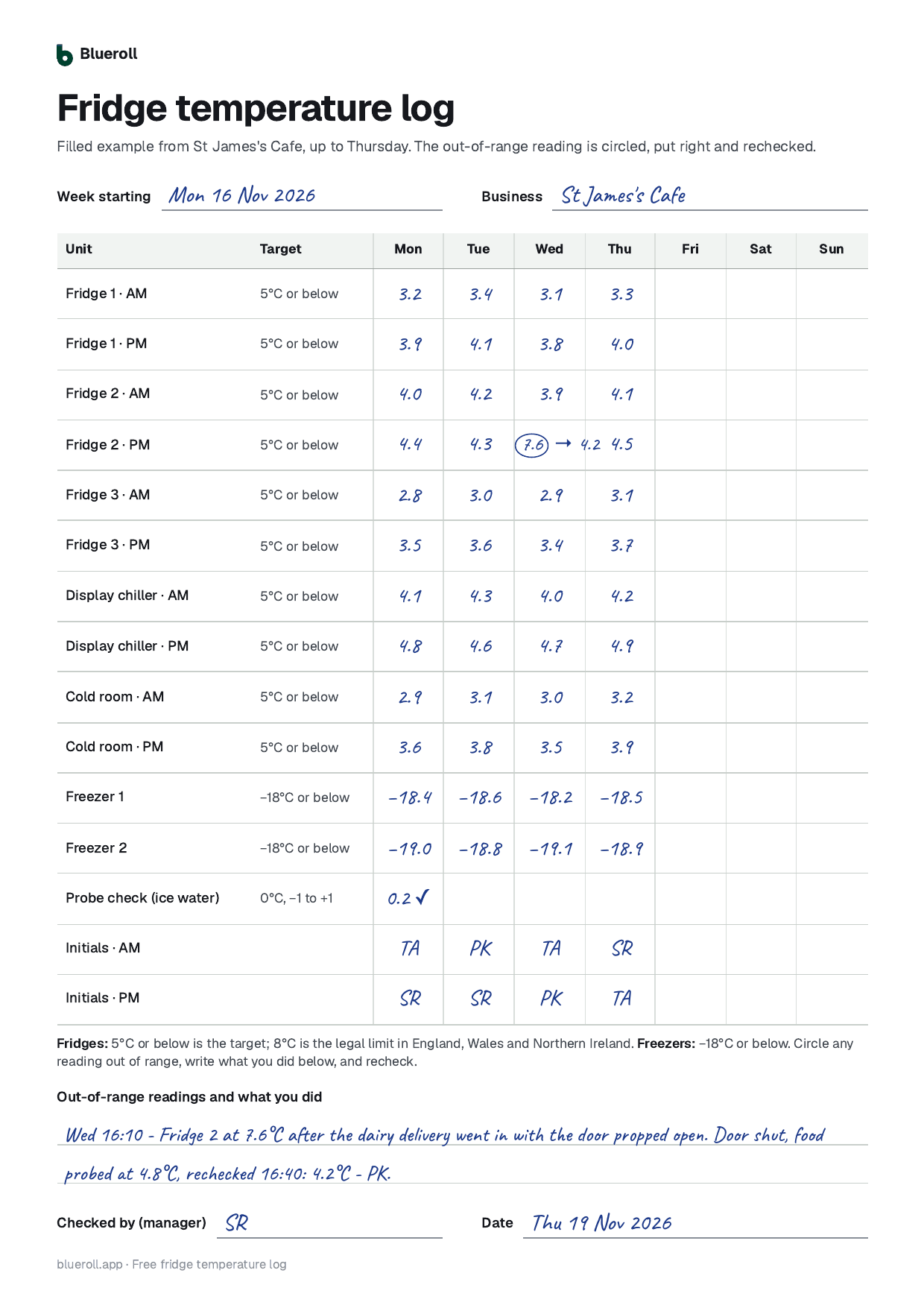
Filled-in fridge temperature log, with an out-of-range reading circled and what was done written below

Safe temperatures in the UK

The numbers an inspector expects to see on your log and your probe.

5°C

Fridges

Set fridges and chilled display to 5°C or below.

8°C

Chilled food, at most

The law in England, Wales and Northern Ireland, and the recommendation in Scotland.

−18°C

Freezers

Keep frozen food at −18°C or below.

70°C

Cooking

A core temperature of 70°C for 2 minutes, or 75°C for 30 seconds.

63°C

Hot holding

Keep hot food at 63°C or above.

82°C

Reheating in Scotland

Elsewhere, reheat until steaming hot all the way through, and only once.

A probe should read between −1°C and 1°C in iced water, and between 99°C and 101°C in boiling water.

What the law expects

Chilled food must be kept at 8°C or below in England, Wales and Northern Ireland. The Food Standards Agency recommends setting fridges to 5°C or below to keep that margin through door openings and deliveries.

Safer Food, Better Business asks you to check fridges and chilled display at least once a day, starting with your opening checks. In England, holding food above 8°C, or hot food below 63°C, is an offence, with time-limited exceptions for service and display.

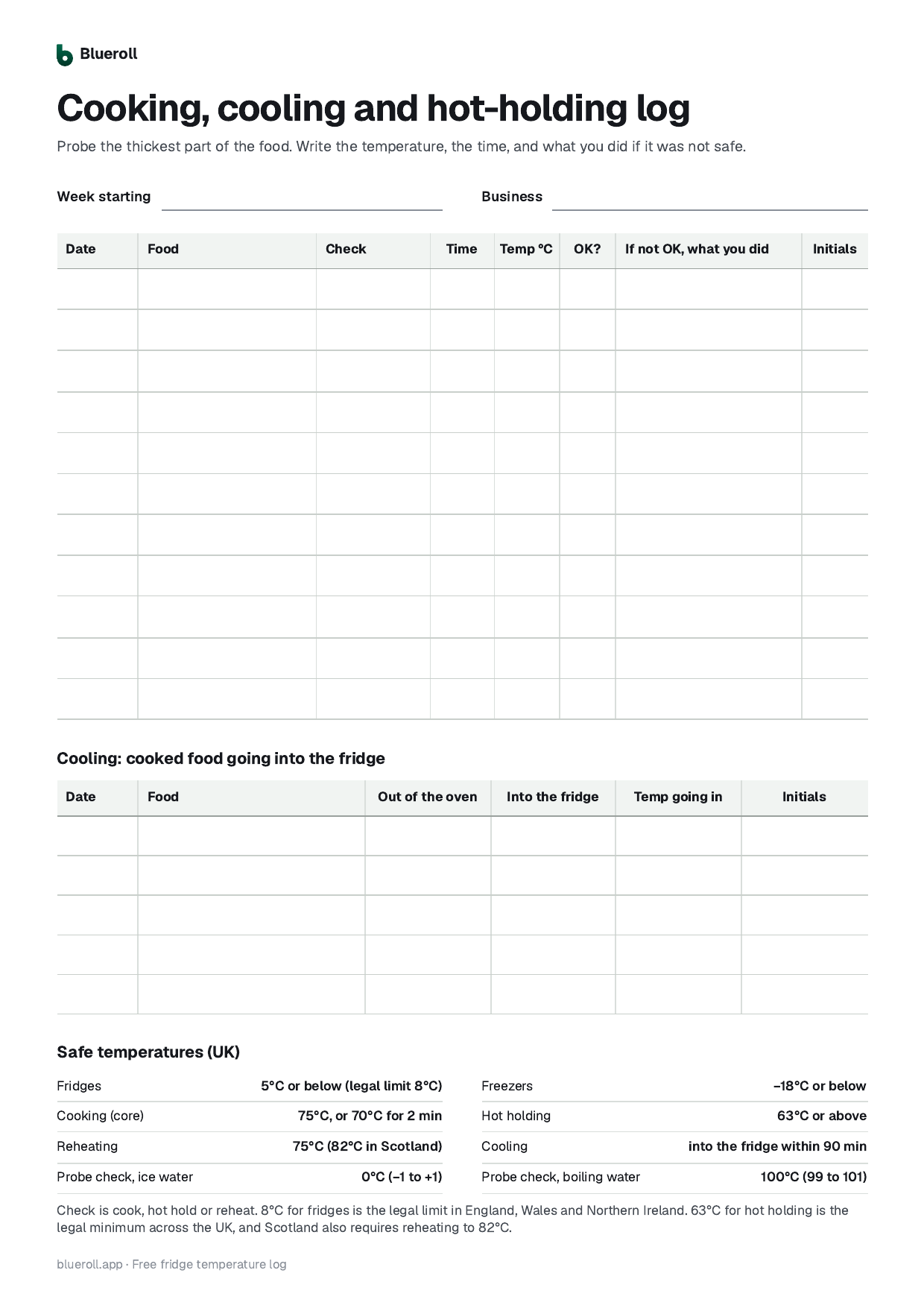
The third sheet records core temperatures for cooking, cooling, reheating and hot holding.

Blank cooking, cooling and hot-holding log with the UK safe temperatures

How Blueroll does it

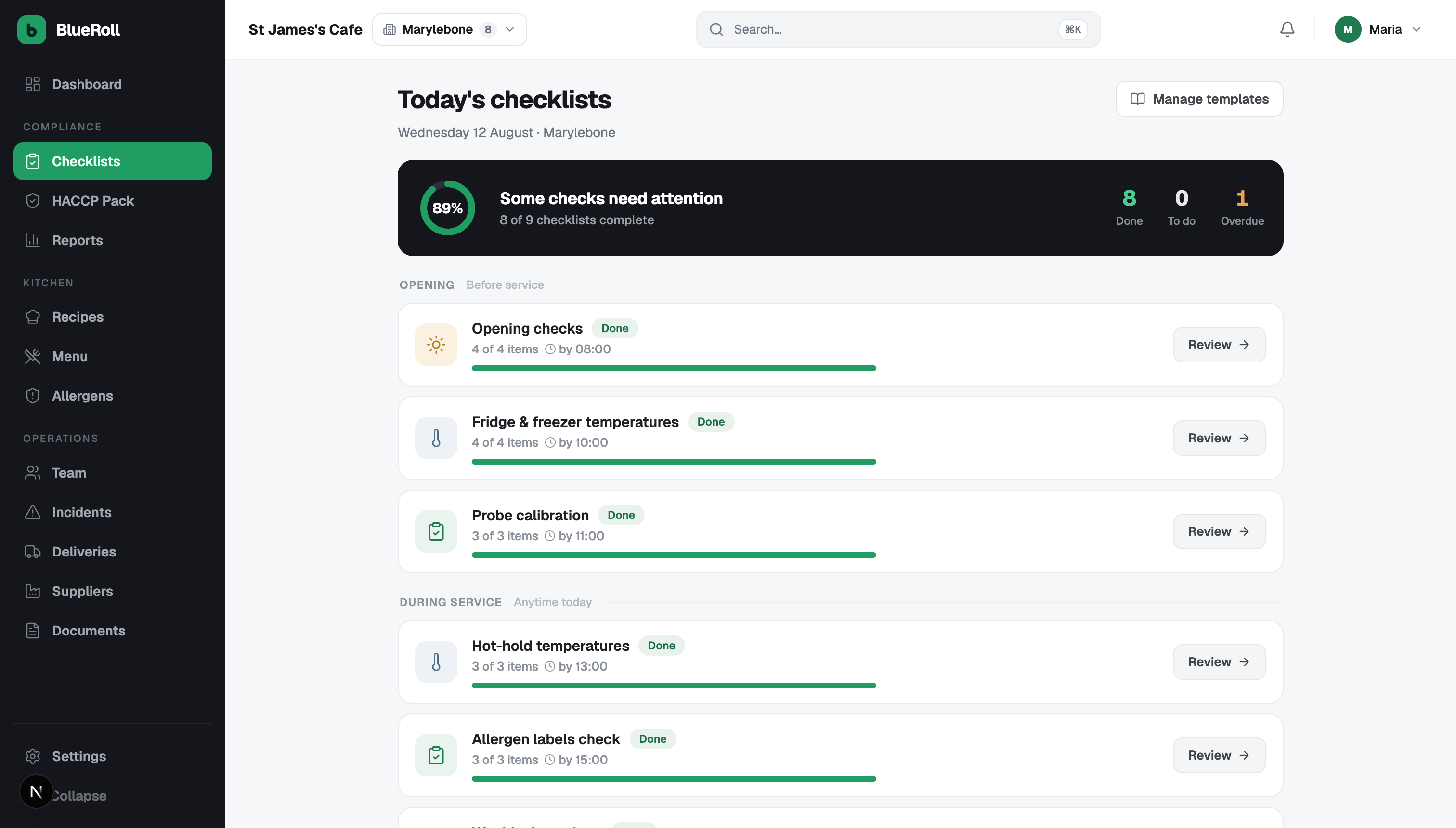
In Blueroll the same checks are on your team’s phones. Every check has a safe range, so a reading outside it is flagged the moment it is logged, the manager is notified, and the corrective action is recorded on the same entry. See how the checklists work.

It costs £24.99 per site per month after a 14-day free trial, with no card needed, and we set it up for you, free. Start the free trial.

Today’s checklists in Blueroll: opening checks, fridge and freezer temperatures, probe calibration and hot-hold temperatures, each marked done

Frequently asked questions

How often should I record fridge temperatures?

At least once a day, and better twice: once when you open and once before you close. Record more often for a fridge that is opened all through service or has given trouble. Write the actual number each time, not a tick.

What temperature should a commercial fridge be in the UK?

5°C or below. The legal maximum for chilled food in England, Wales and Northern Ireland is 8°C, so 5°C leaves a margin for door openings and deliveries. Freezers should be at −18°C or below.

What should I do when a fridge reading is too high?

Check again with a probe, in the food or in water kept in the unit, and look for the cause: a door left open, a delivery just loaded, a blocked fan. If the unit stays above 5°C, move the food to another fridge and call an engineer. If you cannot show the food stayed safe, throw it away, and write down the reading, the time, what you did and the recheck.

Is this template really free?

Yes. No charge, no account and no watermark. Enter your email, the PDF downloads, and you can print it for as long as paper works for you.

Get the free fridge temperature log