Blueroll Blueroll Start for free
Who it's for
Independents Groups & estates NEW Franchises
Features
Multisite NEW HACCP Checklists Allergen Matrix AI Recipe Import Compliance Reports Team Management Deliveries Documents HACCP Pack Incidents
Free tools
Free HACCP template Free self-audit Check a hygiene rating Hygiene rating maps See all free tools →
Pricing FAQ Sign in
Start for free
Blueroll › Free Tools › Food temperature log sheet

Free food temperature log sheet

A printable weekly log in °F for the walk-in, reach-ins, prep-line cooler and freezers, plus a filled-in example and a cooking, hot-holding and cooling log with Food Code temperatures.

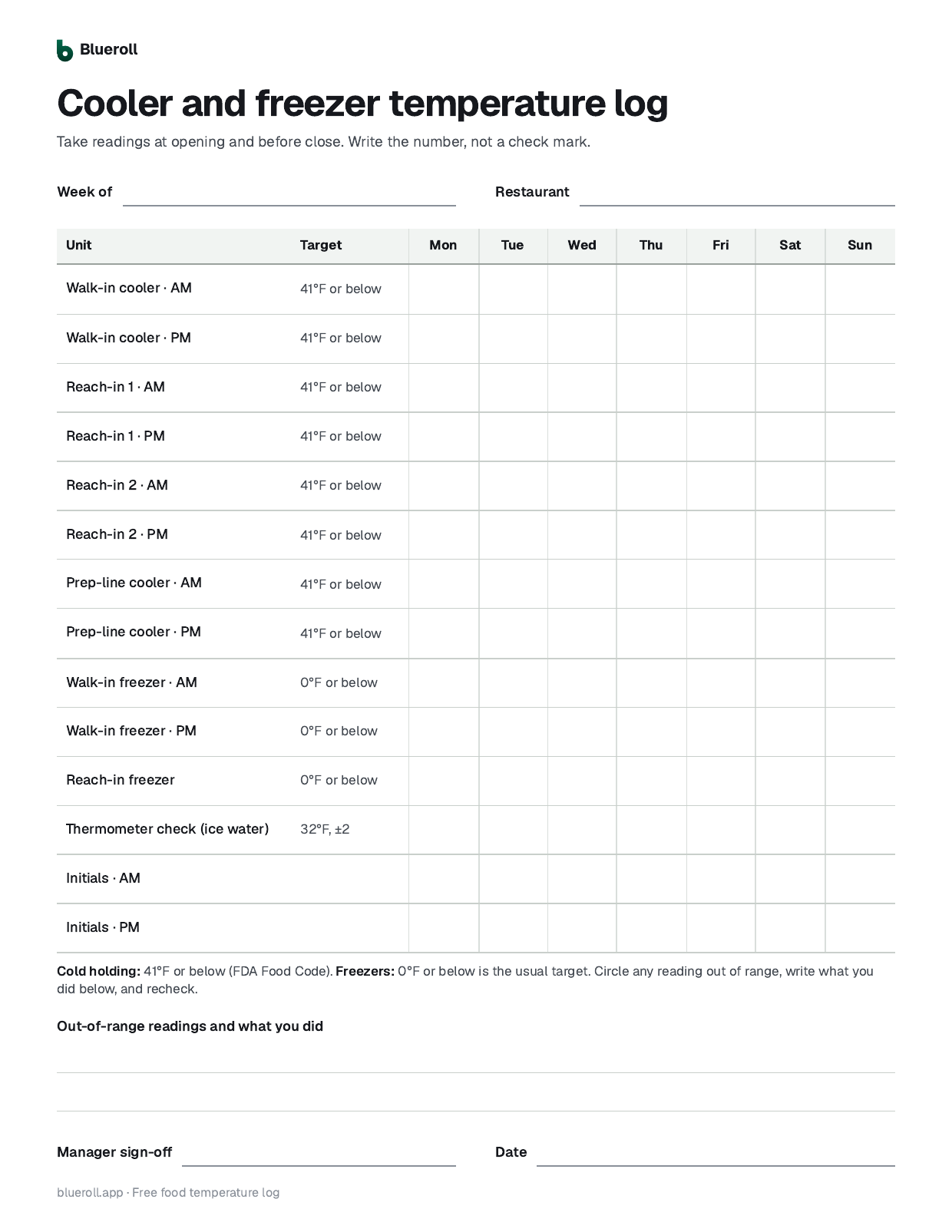
Blank weekly cooler and freezer temperature log in °F, with the target temperature for each unit and a column for each day

How to use the log

  1. Tape the sheet to the walk-in door.
  2. Read every cooler and freezer at opening and before close.
  3. Write the number, the time and your initials, not a check mark.
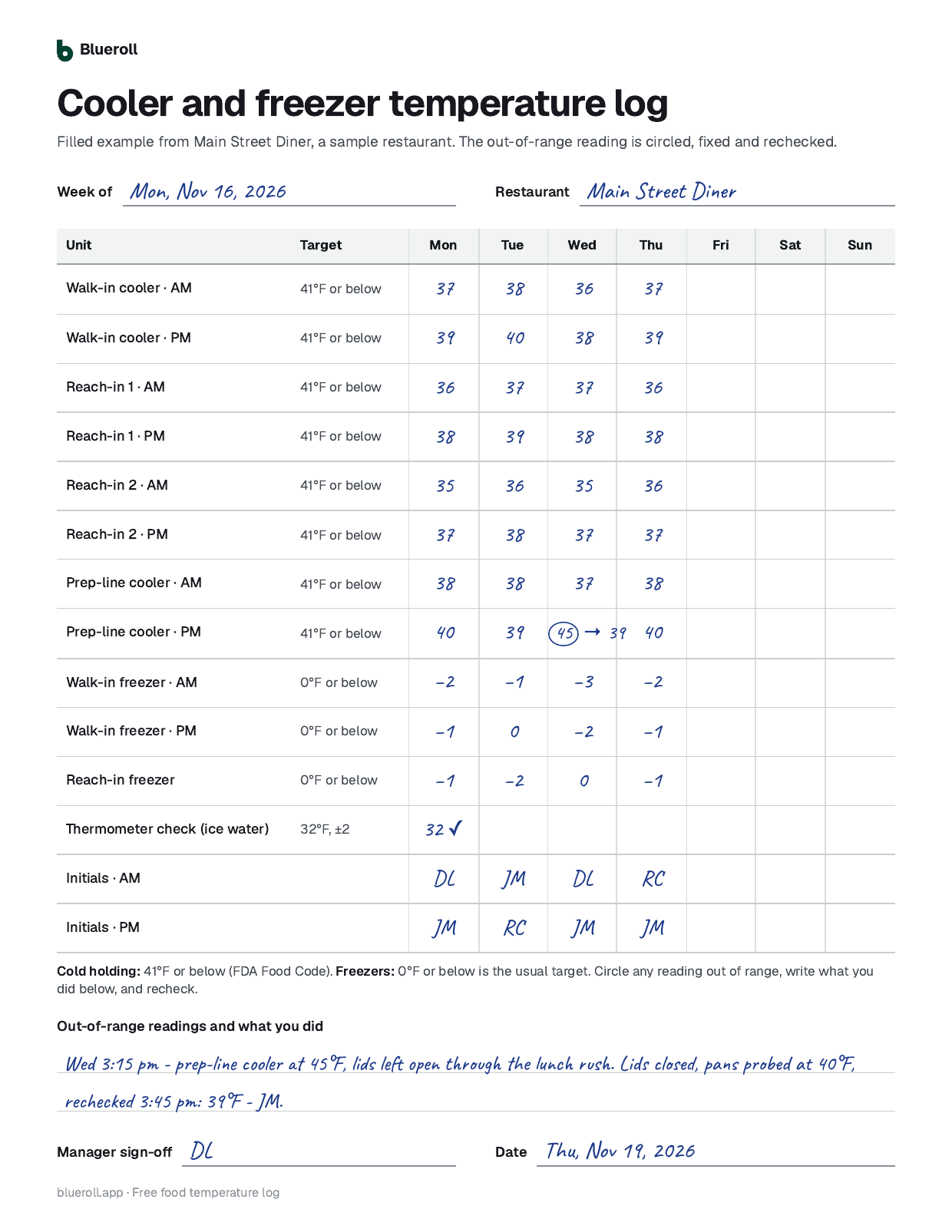
  4. Circle a reading out of range, write down what you did, and recheck.
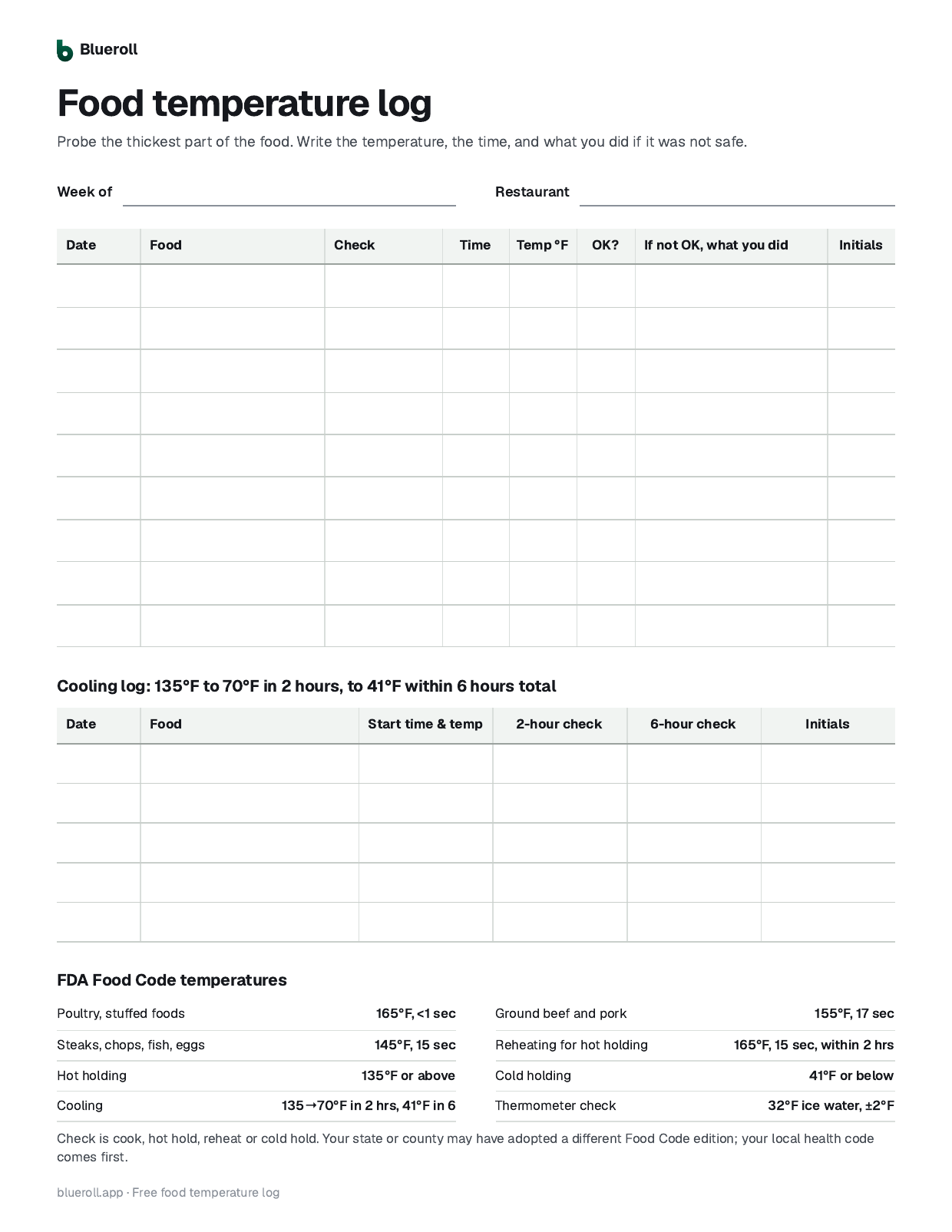
  5. Use the third sheet for final cooking temperatures, hot holding and cooling.

The restaurant cleaning checklist and the restaurant health inspection checklist are free too.

Filled-in cooler and freezer temperature log, with an out-of-range reading circled and what was done written below

FDA Food Code temperatures

Your state or county may have adopted a different edition of the Food Code, and its rules come first.

41°F

Cold holding

Coolers, reach-ins and the prep line. Freezers are usually kept at 0°F or below.

135°F

Hot holding

Hot-held food stays at 135°F or above.

165°F

Poultry and reheating

Poultry and stuffed foods for under a second. Food reheated for hot holding for 15 seconds, within 2 hours.

155°F

Ground beef and pork

For 17 seconds.

145°F

Steaks, fish and eggs

Steaks, chops, fish and eggs for immediate service, for 15 seconds.

6 hours

Cooling

From 135°F to 70°F within 2 hours, then to 41°F within 6 hours in total.

What the Food Code expects

Inspectors check cold holding, hot holding and cooling early: improper holding temperatures are one of the five foodborne illness risk factors the FDA Food Code is built to control.

Your log should show a real reading for every unit, who took it, and what you did when a reading was out of range. How inspections are scored in New York City, Los Angeles, San Francisco, Chicago and Seattle.

Food temperature log for cooking, hot holding and cooling, with FDA Food Code temperatures

How Blueroll does it

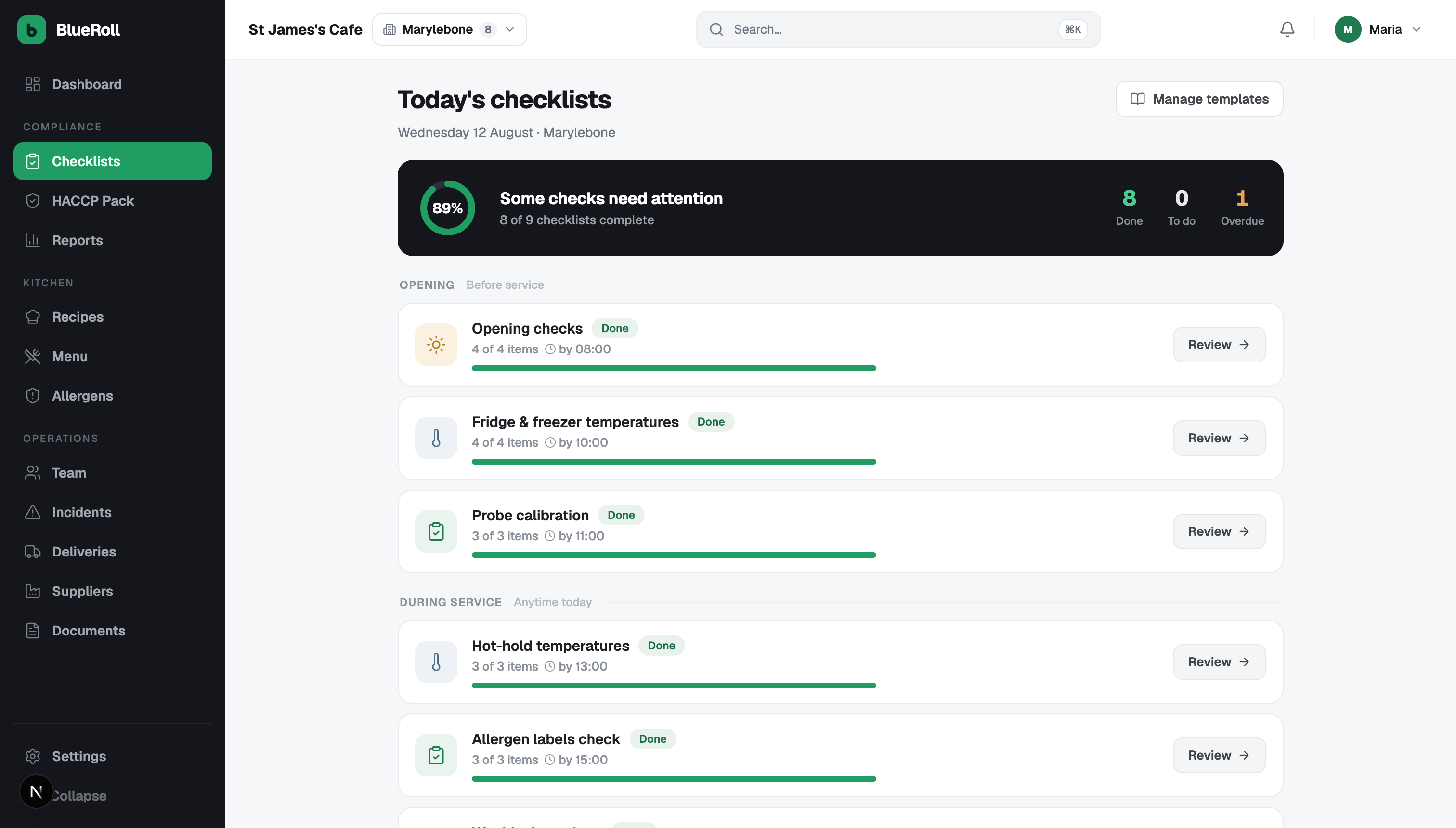
In Blueroll the same checks are on your team’s phones. Every check has a safe range, so a reading outside it is flagged the moment it is logged, the manager is notified, and the corrective action is recorded on the same entry. See how the checklists work.

Try it free for 14 days, no card needed. Start the free trial.

Today’s checklists in Blueroll: opening checks, fridge and freezer temperatures, probe calibration and hot-hold temperatures, each marked done

Frequently asked questions

What temperature should a walk-in cooler be?

41°F or below for cold holding under the FDA Food Code. Many kitchens set the walk-in at 36-38°F to leave a margin for door openings and deliveries. A walk-in freezer is usually kept at 0°F or below.

How often should I check and log food temperatures?

Coolers and freezers at least at opening and before close; hot-held food every 2 to 4 hours; cooling food at the 2-hour and 6-hour marks. Write the actual number each time, not a check mark.

What should I do when a cooler reading is too high?

Check again with a calibrated probe thermometer in the food itself, and find the cause: a door left open, lids off the prep-line cooler, a delivery just loaded, a blocked condenser. Move the food to a unit that is holding temperature and call for service if the unit does not recover. Decide what happens to the food using your local code’s time limits; when in doubt, throw it out. Write down the reading, the time, what you did and the recheck.

Is this log free?

Yes. No charge, no account and no watermark. Enter your email, the PDF downloads, and you can print as many copies as you need.

Get the free food temperature log

Sources